Every year, preventable industrial accidents occur because machinery is improperly serviced—equipment powers on unexpectedly, pressurized systems release energy, or stored power discharges without warning. The root cause? Failed or absent lockout and tagout procedures.
Tagout and lockout procedures aren’t just regulatory checkboxes—they’re the frontline defense against catastrophic injury. When executed correctly, they isolate energy sources, protect maintenance personnel, and ensure operational continuity. When ignored or poorly implemented, they lead to amputations, electrocutions, and fatalities.
Understanding these procedures isn’t limited to plant managers or safety officers. Every employee who interacts with machinery must grasp the fundamentals. This guide cuts through the compliance jargon to deliver a clear, actionable blueprint for effective energy control.
What Are Lockout and Tagout Procedures?
Lockout is the physical isolation of energy sources using a lock that only the authorized employee can remove. Tagout involves placing a warning tag on energy-isolating devices to indicate equipment is not to be operated until the tag is removed.
While both aim to control hazardous energy, lockout is the preferred method because it provides a physical barrier. Tagout is used when lockout isn’t feasible—but it comes with higher risk due to reliance on procedural compliance rather than mechanical security.
The Core Purpose: Hazardous Energy Control
Hazardous energy isn’t just electricity. It includes: - Electrical - Mechanical - Hydraulic - Pneumatic - Chemical - Thermal - Gravitational
Any of these can cause injury if released during servicing. Lockout/tagout (LOTO) procedures ensure all such energy sources are isolated, verified, and secured before work begins.
For example, a conveyor belt undergoing maintenance might store kinetic energy in its rollers or tension. A lockout device on the motor’s disconnect switch prevents electrical restart, while depressurization and mechanical blocks handle residual motion.
Why LOTO Matters: Consequences of Failure
Consider a 2022 incident at a Midwest manufacturing plant: a technician began clearing a jammed press without locking out the main power. A coworker, unaware of the maintenance, reset a safety circuit—activating the machine instantly. The result: a crushed hand and a $285,000 OSHA fine.
This isn’t an anomaly. According to OSHA, nearly 10% of serious accidents in manufacturing involve improper energy control. The financial toll includes: - Fines up to $156,259 per willful violation - Workers’ compensation claims - Downtime and lost productivity - Reputational damage
Beyond compliance, effective LOTO fosters a culture of safety, reduces insurance premiums, and boosts employee morale.
The 6-Step LOTO Procedure: A Standardized Approach
OSHA outlines a clear sequence for lockout/tagout. Deviating from it—even slightly—compromises safety. Here’s the standard workflow:
1. Preparation Before any work, the authorized employee identifies:
- Equipment to be serviced
- Type and magnitude of energy sources
- Isolation points (breakers, valves, disconnects)

A maintenance supervisor at a chemical plant once skipped this step, assuming a valve was closed. It wasn’t. The result: a minor chemical release that required evacuation.
2. Notification Inform all affected employees that servicing will begin. This includes operators, nearby staff, and supervisors. Clear communication prevents accidental re-energization.
3. Shutdown Shut down equipment using normal stopping procedures. Do not rely on emergency stops alone—those don’t isolate energy.
4. Isolation Physically disconnect all energy sources:
- Flip circuit breakers
- Close block valves
- Depressurize lines
- Discharge capacitors
Use only approved lockout devices—universal padlocks or valve covers won’t suffice.
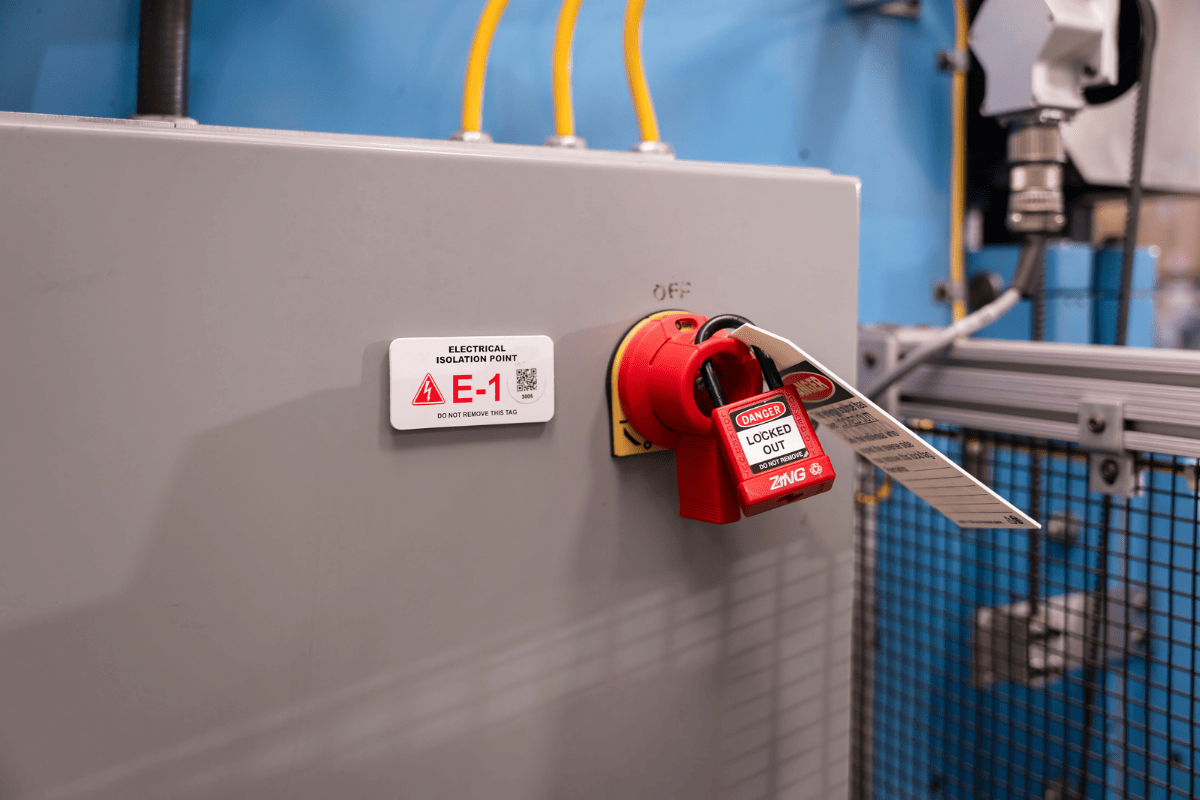
5. Application of Locks and Tags Each authorized employee applies their own lock and tag. This “one person, one lock” rule ensures no one else can remove it. Tags must include: - Name of the employee - Date and time - Reason for lockout
A common mistake: group lockout boxes where only one person holds the key. This violates personal accountability.
6. Verification Attempt to restart the equipment—after ensuring no one is near—to confirm zero energy. Re-engage only after all locks are removed and system checks are complete.
Common Mistakes That Undermine LOTO
Even experienced teams make errors that turn safe procedures into liabilities:
Using Tags Without Locks When Locks Are Possible Tagout alone is less secure. OSHA permits it only when an energy-isolating device can’t be locked. Yet, many facilities default to tags for convenience—risking reliance on human behavior over physical control.
Allowing Unauthorized Removal of Locks Locks must only be removed by the person who applied them. Exceptions require strict protocols: written authorization, supervisor verification, and confirmed employee unavailability.
Skipping Group Lockout Procedures In complex maintenance involving multiple workers, each person must apply their own lock to a group lockout station. A shared lock or single point of control defeats the purpose.
Incomplete Energy Isolation Machines often have multiple energy sources. A CNC machine might run on electricity, pneumatics, and hydraulic fluid. Isolating only the main power leaves residual risks.
Poor Training and Documentation LOTO isn’t a one-time training event. Refresher courses, clear written procedures, and equipment-specific checklists are mandatory. Without them, muscle memory fails under stress.
Equipment-Specific LOTO Considerations Not all machines follow the same rules. Tailor your approach:
Electrical Panels Use circuit breaker lockouts with hasp adapters for multi-worker jobs. Verify zero voltage with a tester rated for the panel’s voltage.
Pneumatic Systems Close upstream valves, bleed air lines, and lock the valve in the closed position. Never assume a closed valve equals isolation—internal leaks happen.
Hydraulic Presses Depressurize lines, lower rams, and use mechanical supports. Stored energy in hydraulic fluid can cause sudden movement even after power-down.
Conveyor Systems Lock out both drive motors and any gravity-fed sections. Use blocking bars to prevent rollback.
Boilers and Steam Systems Isolate fuel supply, close steam valves, and vent lines. Allow sufficient cooldown time—residual heat is a real hazard.
Tools and Devices for Effective Lockout/Tagout Using the right equipment ensures reliability and compliance. Standard components include:
| Device | Purpose | Best Practice |
|---|---|---|
| Lockout Hasps | Enable multiple locks on one isolation point | Use stainless steel for corrosion resistance |
| Valve Lockouts | Secure ball, gate, and butterfly valves | Match lockout to valve type and size |
| Circuit Breaker Locks | Prevent breaker reset | Verify compatibility with brand/model |
| Padlocks | Personal control | Use keyed-alike or keyed-different based on policy |
| Tagout Tags | Communicate warnings | Use weather-resistant, tamper-proof tags |
Invest in color-coded locks (e.g., red for electrical, yellow for mechanical) to enhance visual control. Avoid generic hardware store padlocks—LOTO-specific models are harder to bypass.
LOTO vs. Alternative Methods: Why It’s the Standard
Some facilities use alternative controls—like permit-to-work systems or electronic interlocks. While useful, they don’t replace LOTO.
| Control Method | Pros | Cons | LOTO Comparison |
|---|---|---|---|
| Permit-to-Work | Adds oversight layer | Relies on paperwork | Less reliable than physical locks |
| Electronic Lockout | Remote control, logging | Vulnerable to hacking/failures | Complements LOTO but doesn’t replace it |
| Safety Interlocks | Automatic shutdown | Can degrade or bypass | Not sufficient for maintenance |
LOTO remains the gold standard because it’s physical, personal, and verifiable—three attributes no digital system fully replicates.
Building a Sustainable LOTO Program
Compliance isn’t about passing an audit—it’s about embedding safety into daily operations.
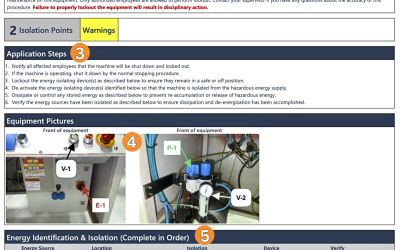
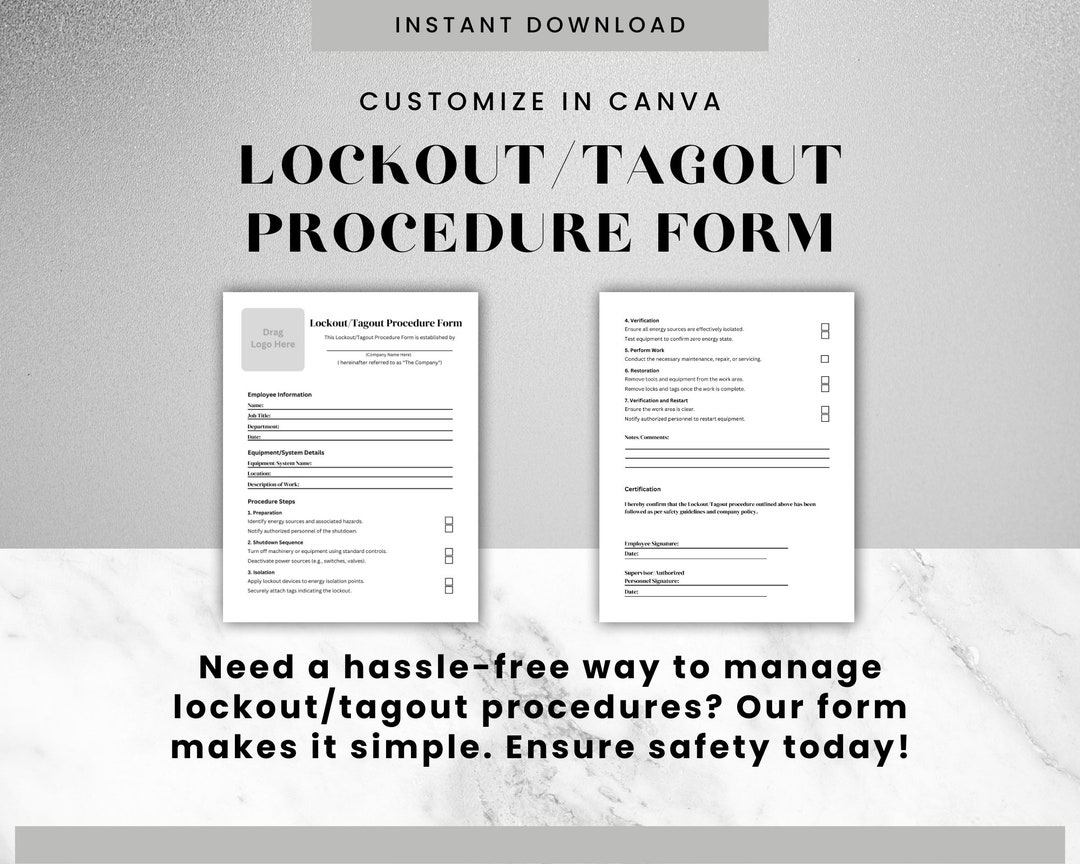
Develop Written Procedures Each machine needs a documented LOTO process. Include:
- Energy sources
- Isolation points
- Step-by-step instructions
- Required tools
Store these near equipment or in digital tablets accessible to technicians.
Train and Retrain Initial training isn’t enough. Conduct annual refreshers and hands-on drills. Include tagout scenarios, group lockout simulations, and emergency response.
Audit and Improve Perform periodic inspections:
- Observe real LOTO applications
- Check lock condition and tag legibility
- Interview workers on procedure clarity
Use findings to refine training and documentation.
Empower Workers Create a culture where stopping work for a LOTO violation is encouraged, not questioned. Anonymous reporting systems can highlight gaps without fear of reprisal.
Final Steps to Lock in Safety
Tagout and lockout procedures are not bureaucratic hurdles—they’re proven safeguards that save lives. The cost of implementation pales next to the human and financial toll of a single preventable incident.
Start today: audit your current LOTO practices, identify high-risk equipment, and update your procedures with specific, actionable steps. Train every affected employee, not just the ones directly servicing machinery. Make lockout a visible, non-negotiable part of your operational rhythm.
When the power is off, the tags are on, and every lock is in place, you’re not just following OSHA—you’re building a workplace where safety is automatic.
Frequently Asked Questions
What’s the difference between lockout and tagout? Lockout uses a physical lock to prevent energy re-energization; tagout uses a warning tag. Lockout is more secure and should be used whenever possible.
Can someone else remove my lock? Only under strict conditions: if you’re unavailable, a supervisor may remove it after verifying you’re safe and following a documented protocol.
Do LOTO procedures apply to battery-powered tools? Yes. Batteries store electrical and sometimes mechanical energy. Remove batteries and lockout charging points during servicing.
How often should LOTO procedures be reviewed? Annually, or whenever equipment changes, new hazards are identified, or an incident occurs.
Who is responsible for implementing LOTO? Authorized employees perform lockout; affected employees comply. Management is responsible for training, equipment, and program oversight.
Are electronic lockout systems compliant? They can be part of a compliant program but must provide equivalent protection to physical locks and include personal accountability.
Must every energy source be isolated? Yes. All hazardous energy sources—electrical, mechanical, hydraulic, etc.—must be controlled before maintenance begins.
FAQ
What should you look for in Mastering Tagout and Lockout Procedures for Workplace Safety? Focus on relevance, practical value, and how well the solution matches real user intent.
Is Mastering Tagout and Lockout Procedures for Workplace Safety suitable for beginners? That depends on the workflow, but a clear step-by-step approach usually makes it easier to start.
How do you compare options around Mastering Tagout and Lockout Procedures for Workplace Safety? Compare features, trust signals, limitations, pricing, and ease of implementation.
What mistakes should you avoid? Avoid generic choices, weak validation, and decisions based only on marketing claims.
What is the next best step? Shortlist the most relevant options, validate them quickly, and refine from real-world results.