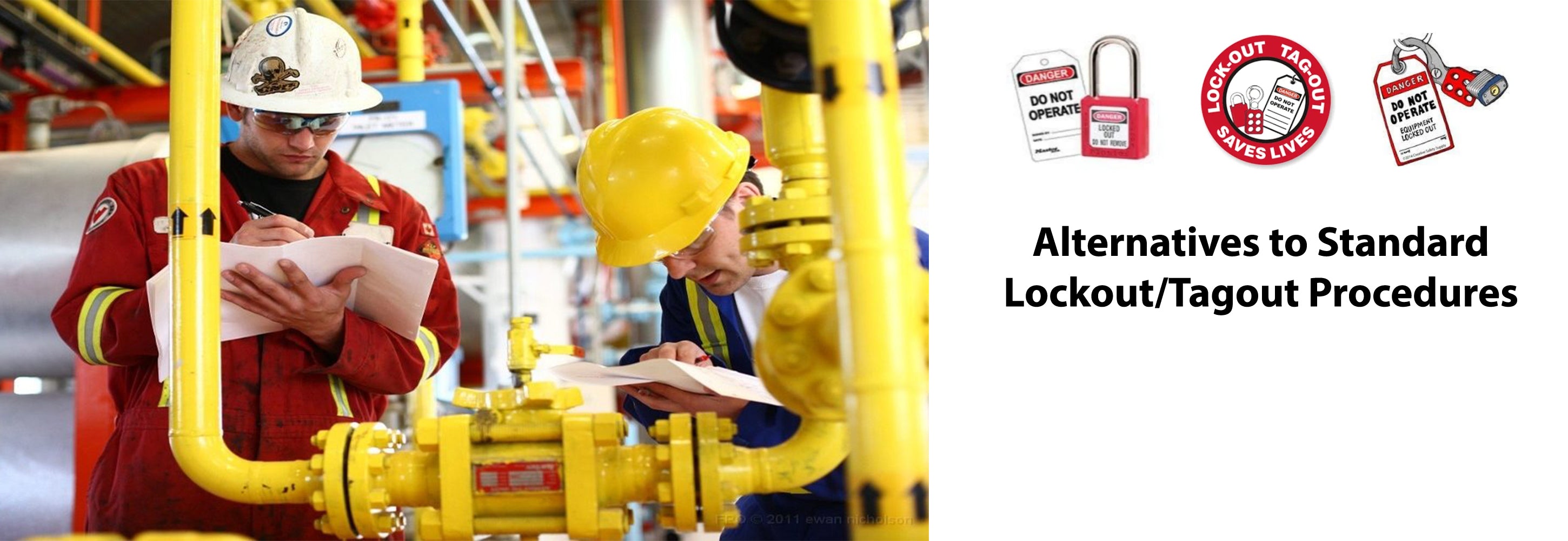
Every year, hundreds of workers are injured or killed during equipment servicing due to unexpected energization or startup. The primary defense? A properly implemented lockout tagout (LOTO) procedure form. This isn’t just paperwork—it’s a legal, operational, and ethical requirement that prevents fatalities and ensures safe maintenance workflows.
Despite widespread awareness, many facilities still rely on incomplete, outdated, or improvised LOTO practices. A study by the National Institute for Occupational Safety and Health (NIOSH) found that nearly 10% of industrial accidents involving machinery during maintenance could be traced back to inadequate lockout procedures—often because the form didn’t match the task, was missing critical steps, or was ignored due to complexity.
The lockout tagout procedure form is not a one-size-fits-all document. It’s a site-specific, machine-specific, and process-specific roadmap that guides authorized employees through the safe isolation of hazardous energy sources.
This article breaks down what makes an effective LOTO procedure form, common gaps in real-world implementation, and how to build or audit your existing templates for maximum safety and compliance.
What Is a Lockout Tagout Procedure Form?
A lockout tagout procedure form is a standardized document that outlines the exact steps required to safely shut down, isolate, lock, and tag equipment before maintenance or servicing. It’s part of a broader energy control program mandated by OSHA 29 CFR 1910.147.
Unlike general safety policies, the LOTO form is actionable. It answers:
- Which energy sources power the equipment (electrical, hydraulic, pneumatic, chemical, thermal, etc.)?
- Where are the isolation points located?
- What locks and tags are required?
- Who is responsible at each stage?
- How is verification of zero energy performed?
A typical form includes diagrams, step-by-step shutdown sequences, lock application points, and verification methods.
Example: In a packaging line with a conveyor system, the LOTO form would specify disconnecting the main motor breaker, closing hydraulic valves, blocking moving parts, and applying individual locks for each technician involved.
Without this form, workers rely on memory or verbal instruction—conditions ripe for human error.
Why a Standardized Form Prevents Accidents
Complacency kills in industrial environments. Workers may skip steps if they’ve “done this a hundred times.” A standardized LOTO procedure form combats this by creating accountability and clarity.
Consider a real-world incident from an automotive plant: a mechanic began clearing a jam in a robotic arm without following the written LOTO. A coworker, unaware of the maintenance, remotely reset the system. The arm activated mid-repair, resulting in severe arm fractures.
An investigation revealed no updated LOTO form existed for that station. The closest document was a generic electrical lockout template that didn’t address pneumatic or robotic systems.
The takeaway: A generic form is no form at all.
A properly designed LOTO procedure form:
- Eliminates ambiguity
- Ensures all energy sources are addressed
- Assigns clear responsibility
- Provides a checklist for auditors
- Serves as training documentation
It transforms subjective judgment into objective action.
Key Elements of an Effective LOTO Procedure Form
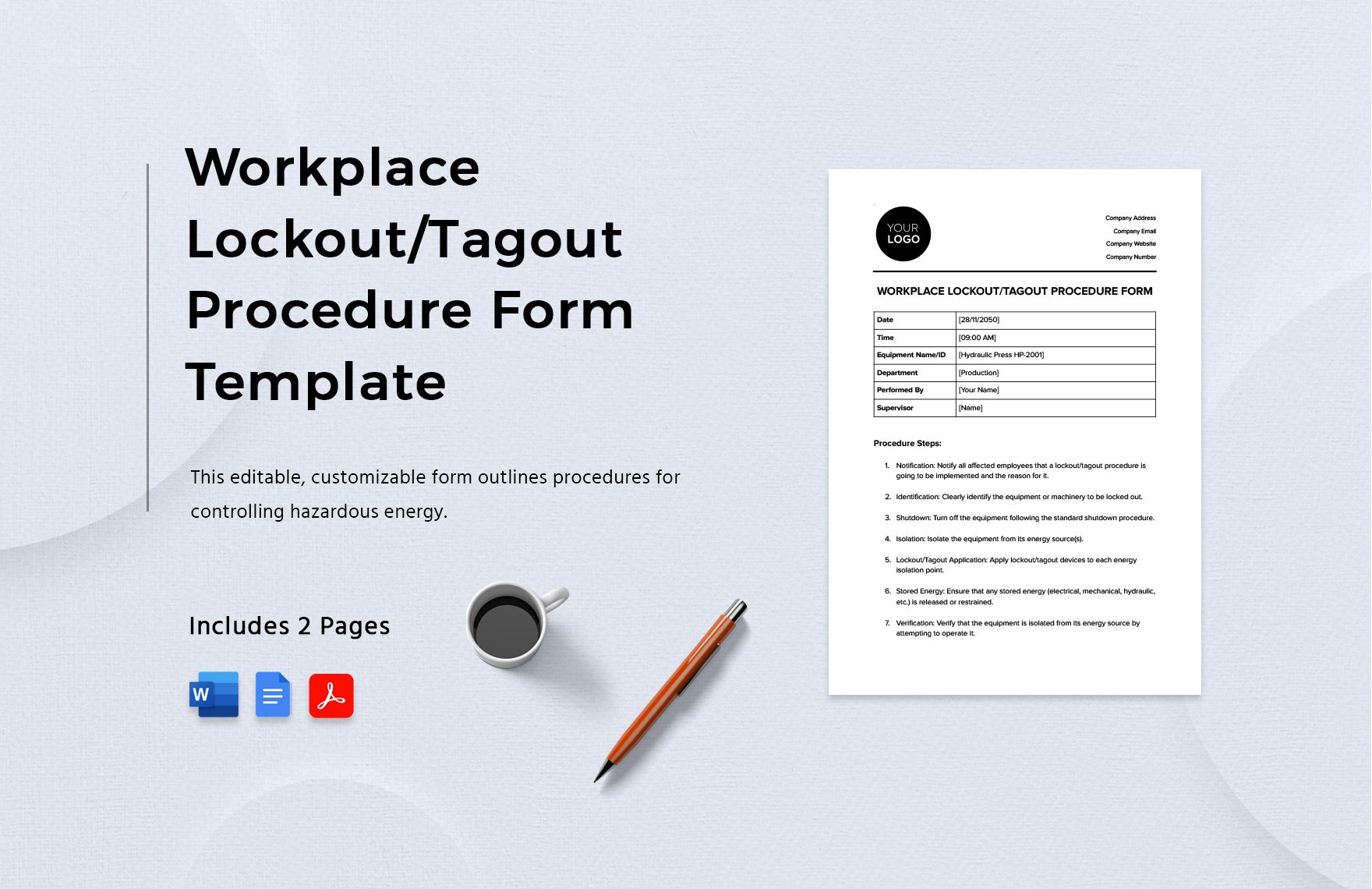
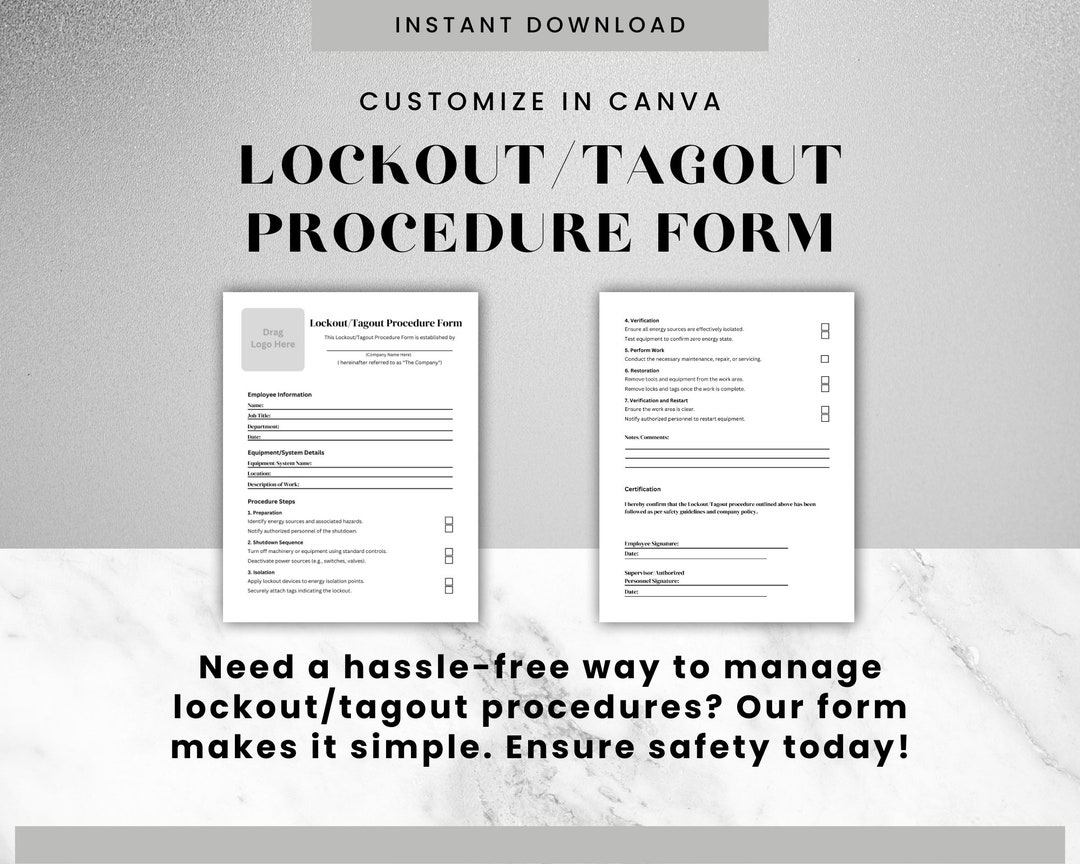
An effective form isn’t just long—it’s precise. Based on OSHA guidelines and industry best practices, every LOTO form should include:
1. Equipment Identification
- Full name, model, serial number, and location
- Unique identifier (e.g., EQ-203-B)
- Associated processes or production lines
Tip: Include a photo or schematic. A visual reference ensures technicians are working on the correct machine.
2. Authorized Personnel Section
- Names or roles of employees permitted to perform LOTO
- Required training certifications
- Signature lines for each step
Not every worker can lock out equipment. Only “authorized employees” trained under OSHA standards may perform energy isolation.
3. Energy Sources Inventory List every type of hazardous energy, including:
- Electrical (main disconnect, control circuits)
- Hydraulic/pneumatic (reservoirs, pressure lines)
- Mechanical (springs, gravity-fed components)
- Thermal (steam lines, heated chambers)
- Chemical (pressurized tanks, gas lines)
For each source, identify: - Isolation method (valve, breaker, block) - Location of control device - Lock type (hasp, padlock, valve lock)
4. Step-by-Step Shutdown Sequence
This section must be chronological and unambiguous. Example:
- Notify operations team of scheduled maintenance
- Press emergency stop button
- Open main disconnect switch (located at Panel B-4)
- Close hydraulic shutoff valve (Valve HV-7)
- Bleed residual pressure from line via relief valve
- Verify zero energy using multimeter and pressure gauge
Avoid vague terms like “shut down equipment.” Specify actions and locations.
5. Lock and Tag Application Detail:
- Number of locks required
- Who applies each lock
- Tag information (name, date, reason, expected completion)
- Use of group lockout boxes if multiple workers are involved
Each lock must be personal—non-transferable and owned by the individual.
6. Verification of Zero Energy
This is non-negotiable. The form must require: - Testing isolation (e.g., attempt to start machine after lockout) - Use of test instruments (voltage tester, pressure gauge) - Confirmation by the authorized employee
Common mistake: Skipping verification because “the breaker is off.” Always test.
7. Release and Re-energization Steps Include:
- Confirmation that tools are removed
- Clearance of the work area
- Notification of operations team
- Sequential removal of locks (last on, first off)
- Controlled startup procedure
Re-energization is just as dangerous as shutdown if done improperly.
Common Mistakes That Undermine LOTO Forms
Even facilities with LOTO forms in place often fall short due to these recurring issues:
- Using generic templates for multiple machines
- Fix: Customize for each asset. A CNC mill and a boiler require vastly different procedures.
- Failing to update forms after equipment changes
- Fix: Review LOTO documents after any retrofit, relocation, or upgrade.
- Omitting stored energy sources
- Fix: Springs, flywheels, capacitors, and pressurized lines must be addressed.
- Allowing group lockout without a control box
- Fix: Use a group lockout station where each worker applies their lock to a single hasp.
- Not requiring employee sign-off
- Fix: Signatures prove accountability and completion.
One food processing plant avoided a major injury when a technician noticed an outdated LOTO form didn’t include a recently added steam line. He halted work, updated the form, and discovered 12 other machines with similar documentation gaps.
Proactive review saves lives.

How to Implement LOTO Forms in Your Workflow
Creating a form is only step one. Integration into daily operations is critical.
Step 1: Conduct a Machinery Audit Inventory all equipment requiring LOTO. Prioritize high-risk machines (presses, conveyors, reactors).
Step 2: Develop Machine-Specific Forms Use input from maintenance teams, engineers, and safety officers. Include visuals and exact part names.
Step 3: Train All Affected Employees “Affected” workers (those who operate but don’t service equipment) must understand the LOTO process and never bypass locks.
Training should cover: - Recognizing when LOTO is required - Understanding tag meanings - Reporting unauthorized removal
Step 4: Perform Periodic Inspections OSHA requires annual audits. Assign a team to: - Observe a live LOTO procedure - Verify form accuracy - Interview personnel - Document findings and corrections
Step 5: Digitize for Accessibility Paper forms get lost. Consider digital LOTO systems where forms are stored in a central database, accessible via tablets or kiosks on the shop floor.
One manufacturing site reduced LOTO errors by 60% after switching to a mobile-accessible system with built-in checklists and photo references.
Top 5 LOTO Procedure Form Templates and Tools
While you should customize every form, starting with a solid template speeds up compliance. Here are five reliable options:
| Tool | Key Features | Best For |
|---|---|---|
| OSHA 1910.147 Template (Free PDF) | OSHA-compliant structure, basic fields, printable | Small businesses, compliance starters |
| Creative Safety Supply LOTO Generator | Interactive builder, machine-specific fields, export to PDF | Mid-sized facilities, quick rollout |
| EHS Insight LOTO Module | Digital workflows, audit trails, mobile access | Large enterprises, integrated EHS systems |
| Lockout Tagout Pro (App) | Step-by-step guides, photo uploads, lock tracking | Field technicians, mobile teams |
| SafetyCulture (iAuditor) | Customizable LOTO checklists, real-time reporting, cloud storage | Audits, remote sites, multi-location ops |
Choose based on your scale and tech readiness. Paper works—if it’s accessible, updated, and enforced.
Real-World Use Case: Brewery Tank Maintenance
A craft brewery needed to clean a 500-gallon fermentation tank. The LOTO procedure form included:
- Energy sources: Electrical (agitation motor), CO2 pressure (carbonation line), thermal (cooling jacket)
- Isolation steps:
- Lock main power disconnect (Circuit 7B)
- Close CO2 isolation valve (V-12) and bleed line
- Drain and block cooling glycol lines
- Verification: Pressure gauge check, voltage test at motor starter
- Release protocol: Confirm hatch is sealed, notify supervisor, unlock in reverse order
Because the form existed and was followed, a technician avoided exposure to pressurized CO2 when a valve malfunctioned during cleaning. The system remained isolated.
This wasn’t luck. It was procedure.
Build, Audit, and Enforce—Every Time
A lockout tagout procedure form is only as strong as its weakest link: outdated data, skipped steps, or poor training.
Start by auditing one high-risk machine. Build a detailed, accurate form. Train your team. Observe execution. Repeat.
Compliance isn’t a project—it’s a culture. The form is your blueprint. Use it to protect people, avoid citations, and ensure every maintenance task ends safely.
Now go review your nearest LOTO form. Is it specific? Is it followed? If not, it’s time to rewrite it—before an incident forces the issue.
Frequently Asked Questions
What is the difference between a LOTO form and a LOTO policy? A policy is a general statement of intent; a form is a detailed, machine-specific procedure used during lockout.
Who can create a LOTO procedure form? Safety officers, maintenance supervisors, or engineers—typically in collaboration with OSHA-trained personnel.
Do all machines need a LOTO form? Yes, if they have potentially hazardous energy sources and require servicing where unexpected startup could cause injury.
Can LOTO forms be digital? Yes, digital forms are acceptable if they are secure, accessible, and include all required elements.
How often should LOTO forms be reviewed? At least annually, or whenever equipment is modified, relocated, or involved in an incident.
What happens if a LOTO form is not followed? It violates OSHA regulations, risks catastrophic injury, and can result in fines, litigation, or shutdowns.
Are tags enough without locks? No. Tags are warnings; locks are physical restraints. OSHA requires lockout unless tagout can provide equivalent protection (rare in industrial settings).
FAQ
What should you look for in Lockout Tagout Procedure Form Essentials for Safety Compliance? Focus on relevance, practical value, and how well the solution matches real user intent.
Is Lockout Tagout Procedure Form Essentials for Safety Compliance suitable for beginners? That depends on the workflow, but a clear step-by-step approach usually makes it easier to start.
How do you compare options around Lockout Tagout Procedure Form Essentials for Safety Compliance? Compare features, trust signals, limitations, pricing, and ease of implementation.
What mistakes should you avoid? Avoid generic choices, weak validation, and decisions based only on marketing claims.
What is the next best step? Shortlist the most relevant options, validate them quickly, and refine from real-world results.